A gravel driveway takes more material than almost anyone expects, because a proper driveway is not a single layer of gravel raked over dirt. It is built in two or three compacted layers of different stone sizes, usually 10 to 12 inches deep in total for a new driveway. That depth is what keeps the surface from rutting, sinking, and disappearing into the soil after the first wet season.
This guide gives you the quick numbers for common driveway sizes, explains the layer system, walks through the exact formula with a worked example, and covers what the gravel will cost. By the end you will be able to order by the ton or cubic yard with confidence.
The quick answer
For a new driveway built the standard way (three compacted layers of about 4 inches each, 12 inches total), here is what common sizes need, including a 10 percent waste allowance. Tonnage assumes typical crushed stone at about 1.4 tons per cubic yard.
| Driveway | Size | Depth | Gravel needed | Approx weight |
|---|---|---|---|---|
| Single car, new build | 50 × 12 ft | 12 in (3 layers) | ~24 cu yd | ~34 tons |
| Double car, new build | 50 × 20 ft | 12 in (3 layers) | ~41 cu yd | ~57 tons |
| Top layer refresh only | 50 × 12 ft | 3 in | ~6 cu yd | ~8.5 tons |
A useful rule of thumb: every 100 square feet of driveway takes about 0.31 cubic yards (roughly 0.43 tons) of gravel per inch of depth. For your exact dimensions, our gravel calculator converts any area and depth into cubic yards and tons instantly.
Why driveways are built in layers
A single thick pour of one gravel size fails in predictable ways: small stones sink into soft soil, large stones never lock into a smooth surface, and everything migrates. The layer system solves this by giving each depth of the driveway a different job.
| Layer | Typical stone | Depth | Job |
|---|---|---|---|
| Base | #3 stone (1 to 2 in, angular) or larger | ~4 in | Foundation and drainage; spreads vehicle weight into the soil |
| Middle | #57 stone (about 3/4 to 1 in) | ~4 in | Locks the base in place and builds thickness |
| Top | Crusher run / #411 (3/4 in minus with fines) | ~4 in | Compacts into a tight, smooth driving surface |
Stone names vary by region (crusher run is also sold as dense grade, road base, or #411), but the pattern is constant: big angular stone at the bottom, medium stone in the middle, and a top layer containing fines that compact into a firm crust. Each layer is spread and compacted before the next goes down, ideally with a couple of days between deliveries so the layers settle.
Soil and traffic change the totals. On firm, well-drained ground with light car traffic, some builders run a two-layer, 6 to 8 inch driveway. On soft clay, or where trucks and RVs will park, 12 inches is the safe standard and heavy-duty drives go deeper. When in doubt, build deeper: the base is the one layer you cannot fix later without starting over.
The formula
Each layer is a simple volume calculation, repeated per layer:
Step 1: Area = Length × Width (in feet)
Step 2: Volume = Area × Depth in feet (divide inches by 12)
Step 3: Cubic yards = Volume / 27
Step 4: Add 10 percent for waste, settling, and compaction
Step 5: Tons = Cubic yards × 1.4 (typical crushed stone; confirm with your supplier)
Calculate each layer separately, because you are ordering different stone for each. The depths are the same in a standard build, so the per-layer quantity is identical; only the material changes.
Worked example: 50 by 12 foot single-car driveway
A new 50 foot driveway, 12 feet wide, built with three 4 inch layers.
Step 1: Area
50 × 12 = 600 square feet
Step 2: Volume per layer
600 × (4 / 12) = 200 cubic feet
Step 3: Cubic yards per layer
200 / 27 = 7.4 cubic yards
Step 4: Add 10 percent waste
7.4 × 1.10 = 8.2 cubic yards per layer
Step 5: Tons per layer
8.2 × 1.4 = about 11.4 tons per layer
Total for the driveway: roughly 24.5 cubic yards, or about 34 tons across the three layers: one delivery of #3 base stone, one of #57, and one of crusher run, ordered a few days apart so each layer can be spread and compacted before the next arrives.
That 34-ton figure surprises people, and it is exactly why a quick estimate matters before calling suppliers. Run your own dimensions through the gravel calculator to get per-layer cubic yards and tonnage for your driveway.
Choosing the gravel for each layer
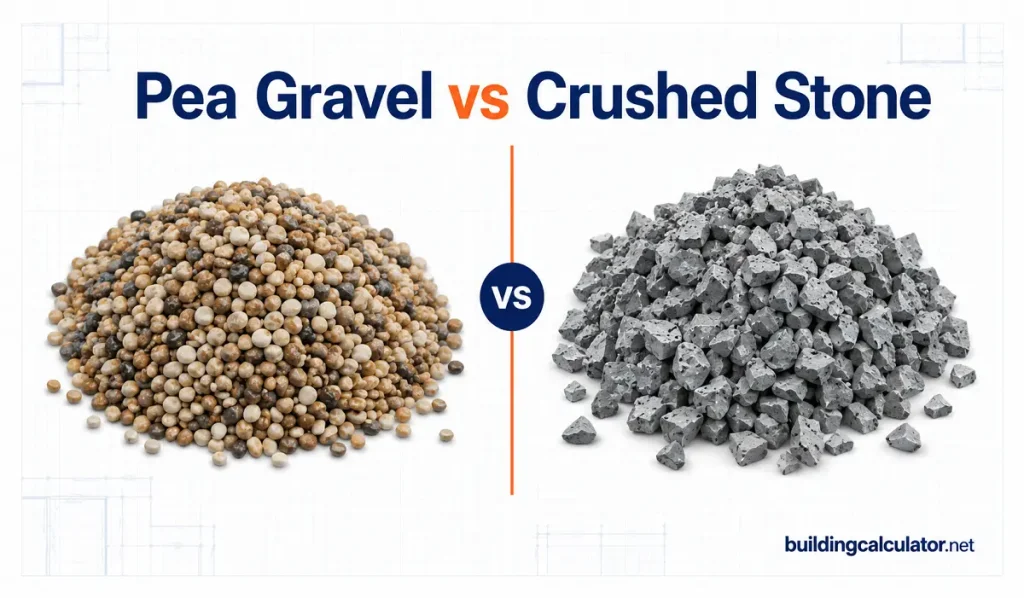
The base and middle layers are structural, so clean angular crushed stone is the right call: the sharp edges lock together under compaction. Rounded stone like pea gravel rolls instead of locking, which is why it belongs on paths and decorative beds, not in a driveway’s structure. For the top layer, crusher run with fines compacts into the firmest surface, while #57 stays looser but drains faster and looks cleaner.
If you are weighing a decorative top like pea gravel against crushed stone, our pea gravel vs crushed stone guide covers where each works and where each fails. The short version for driveways: crushed stone for anything a car drives on, pea gravel only with edging and modest slopes.
What gravel for a driveway costs
Crushed stone commonly runs about $20 to $40 per ton delivered, varying with the stone type, your region, and haul distance. At those rates, the 34-ton single-car driveway above lands roughly between $700 and $1,400 in material. Base stone is usually the cheapest per ton and decorative top stone the most expensive, so the per-layer prices will differ on your quote.
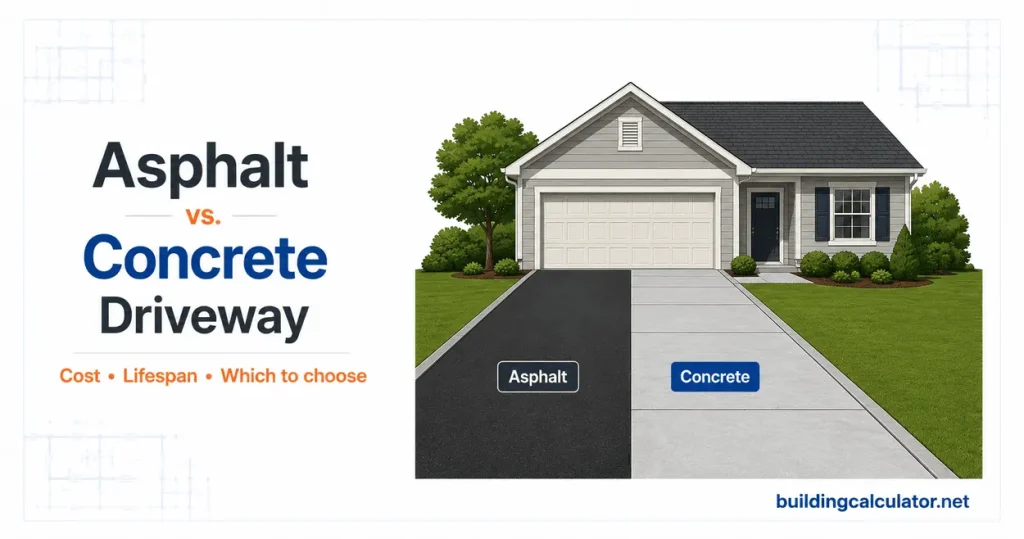
Delivery often carries a separate fee or a minimum load, so price the whole job with two or three local suppliers rather than comparing per-ton numbers alone. If you are paying for installation, a professionally built gravel driveway typically lands around $1 to $3 per square foot all in, which is still the cheapest driveway surface available. For comparison against paving, see our asphalt vs concrete driveway guide: gravel costs a fraction of either, in exchange for annual upkeep.
Ordering and installation tips
Order by the layer, not the total. Three separate deliveries of the right stone, spaced a few days apart, build a better driveway than one mixed pile, and each layer should be spread and compacted before the next arrives. Lay geotextile fabric on the excavated soil before the base layer if your ground is soft or clay-heavy: it stops the base stone from sinking into the subgrade and is the cheapest insurance in the whole build. Crown the surface slightly (the center 2 to 5 percent higher than the edges) so water sheds instead of pooling, and plan on raking ruts and topping up the surface layer every year or two.
Estimate your driveway
Measure your driveway’s length and width, decide the build (three 4 inch layers for a new driveway on typical soil, or 2 to 3 inches for a top-up), and run each layer through our gravel calculator for cubic yards, tons, and cost. Five minutes of math is the difference between one clean order and a second delivery fee.
Frequently asked questions
How thick should a gravel driveway be?
A new gravel driveway on typical soil should be 10 to 12 inches deep in total, built as two or three compacted layers. Light-duty drives on firm, well-drained ground can work at 6 to 8 inches, while driveways carrying trucks or sitting on soft clay should go 12 inches or more. A refresh of the top layer only needs 2 to 3 inches.
How many tons of gravel do I need for a driveway?
Multiply length by width by depth in feet, divide by 27 for cubic yards, then multiply by about 1.4 for tons. A 50 by 12 foot driveway built 12 inches deep needs roughly 34 tons including waste. Per 100 square feet, figure about 0.43 tons per inch of depth.
Can I just use one layer of gravel?
Not for a driveway you want to last. A single layer of small stone sinks into the soil and ruts, while a single layer of large stone never compacts into a drivable surface. The layered build (large base, medium middle, fine top) exists because each size does a job the others cannot. The one shortcut that works is skipping the middle layer on very firm ground, not skipping the base.
What is the best gravel for the top of a driveway?
Crusher run (also sold as #411, dense grade, or road base) makes the firmest top because its mix of crushed stone and fines compacts into a tight crust. #57 stone is the alternative where you want better drainage and a cleaner look, at the cost of staying looser underfoot. Avoid rounded pea gravel as a driving surface; it migrates under tires.
Do I need fabric under a gravel driveway?
On soft, wet, or clay soils, yes: a geotextile fabric between the soil and the base layer keeps the stone from sinking into the ground and can save you from re-buying the base every few years. On firm, gravelly, well-drained soil it is optional. Given the cost of fabric against the cost of stone, it is cheap insurance on any questionable subgrade.
How often do you need to add gravel to a driveway?
Plan on raking out ruts and potholes a couple of times a year and topping up the surface layer with an inch or two of fresh stone every 1 to 2 years, depending on traffic and weather. The base and middle layers should not need replacement if they were built and compacted properly; it is the fine top layer that migrates and thins.
Is a gravel driveway cheaper than asphalt or concrete?
Yes, by a wide margin upfront. Gravel typically lands around $1 to $3 per square foot installed, versus roughly $3 to $7 for asphalt and $5 to $12 for concrete. The trade-off is maintenance: gravel needs regular raking and top-ups, while paved surfaces mostly do not. Our asphalt vs concrete comparison covers the paved options if you are deciding between all three.